Shifting from Calendar to Data-Informed Maintenance
Every week, mining operations around the world shut down process plants, pull equipment out of service, and deploy maintenance crews — not because anything is wrong, but because the calendar says it's time.
This is cycle-based maintenance. And while it was considered best practice for decades, it has a problem that rarely gets discussed openly: you're often repairing equipment that didn't need repairing, introducing failure risk in the process, and losing production hours you'll never get back.excitement around.
The hidden cost of opening equipment that doesn't need it
Cycle-based schedules were developed in an era when there was no better option. Without data, the safest approach was to intervene regularly and hope for the best. The logic made sense then.
It makes less sense now — because every time a maintenance crew opens a piece of equipment on a fixed schedule, several things happen that wouldn't otherwise:
-
Seals get disturbed. Bolts get over-torqued. Components get handled unnecessarily. The act of servicing introduces micro-damage that a running machine wouldn't have incurred on its own.
-
Production stops — even when the equipment was running well and would have continued to do so.
-
Crew time and parts inventory get consumed on interventions that delivered no real value.
Industry estimates suggest that between 30 and 50 percent of planned maintenance activities on mining equipment are carried out on assets that show no signs of degradation. That's not a maintenance programme — that's scheduled disruption.
The alternative isn't skipping maintenance. It's knowing when it's actually needed.
Data-driven maintenance — often called condition-based or predictive maintenance — uses real-time equipment data to understand asset health continuously, and only triggers an intervention when the data shows one is warranted.
The results are significant. Operations that have made the shift report reductions in unplanned downtime of 30 to 50 percent, meaningful drops in maintenance cost per tonne, and the ability to plan work during low-production windows rather than forcing stoppages at fixed intervals.
The barrier isn't technology. It's data.
Most mining operations generate enormous volumes of equipment data — vibration signatures, temperature trends, current draw, pressure readings — across hundreds of assets simultaneously. The problem is that this data sits in fragmented, incompatible systems. A Metso crusher logs data differently from a Sandvik drill. A SCADA historian doesn't talk to a maintenance management system. Underground assets drop off the network entirely.
Without a clean, unified data foundation, predictive maintenance models have nothing reliable to train on — and the shift from calendar-based to condition-based maintenance never happens.
This is the problem SemanticIQ was built to solve.
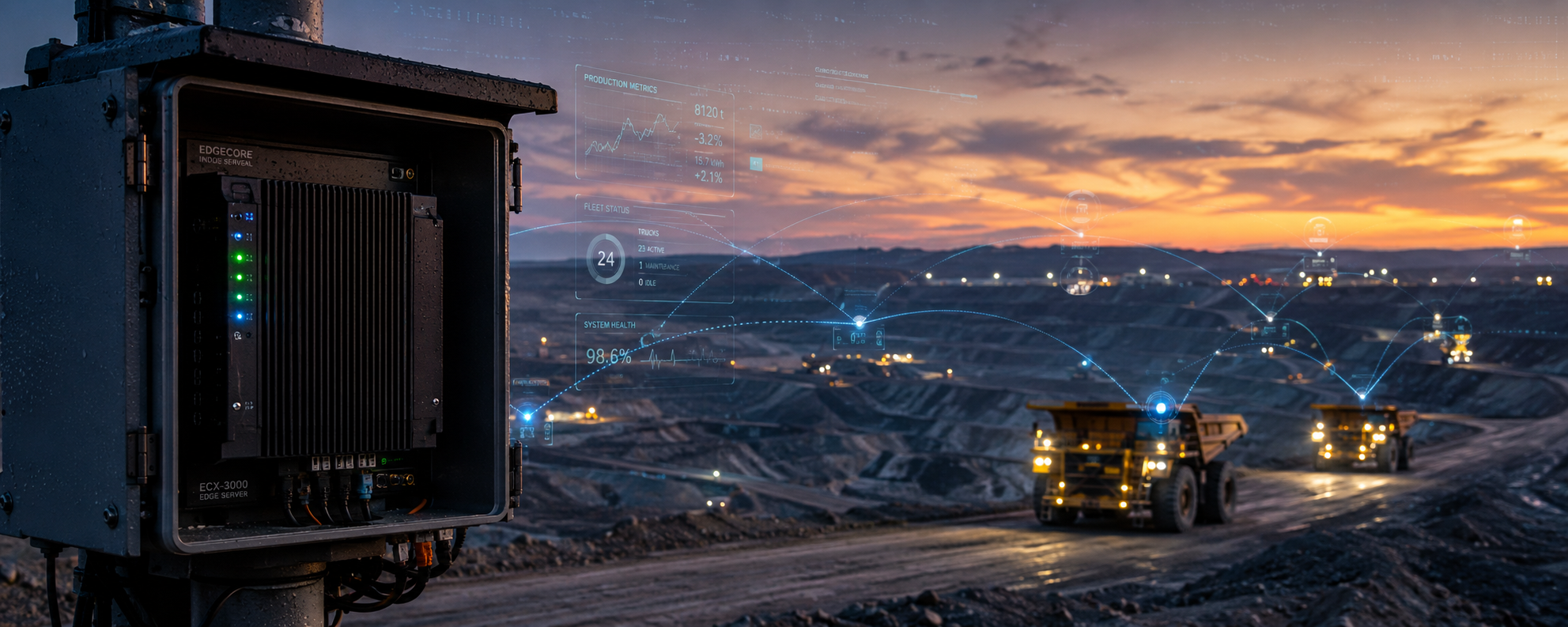
We build edge-native data pipelines specifically for mining environments — running on existing site hardware, working completely offline underground, and automatically ingesting and cleaning fragmented equipment data from across your operation.
The result is a unified, real-time picture of asset health across your site — one that your maintenance team can actually use to make decisions, and that machine learning models can use to predict failures before they become stoppages.
The shift from cycle-based to condition-based maintenance doesn't require replacing your systems. It requires cleaning and connecting the data you're already generating.
Ready to harmonise your data?
We run free Site Data Readiness Assessments for mining operations who want to understand what's possible. Send us a sample of your site data and we'll show you specifically which assets are candidates for predictive maintenance, where your data gaps are, and what ROI is realistic for your operation.
Contact us today to schedule a demo or discuss a pilot project.